When to Eat Them, How to Eat Them, and Why It Matters
Travellers often arrive in Azerbaijan with a simple question: what should I eat?
Locals, however, rarely think about food that way.
In Azerbaijan, dishes are not chosen from a checklist. They are shaped by season, time of day, weather, social setting, and habit. Some foods are eaten daily and quietly. Others appear only in specific months. A few are celebrated online but rarely ordered by locals outside of special occasions.
Understanding when a dish makes sense and how it is usually eaten changes everything. It helps visitors avoid disappointment, overeating, and the feeling that they “missed” something — while allowing food to become part of daily life rather than a performance.
This guide is not a ranking of the “best” Azerbaijani dishes. It is a local priority list: what matters, when it matters, and why.
Everyday & Accessible: Foods Locals Eat Regularly
These are the foods that form the backbone of daily eating. They are simple, familiar, and rarely ceremonial. Most are eaten standing, quickly, or between errands. They reflect movement, work schedules, and neighborhood life more than celebration.
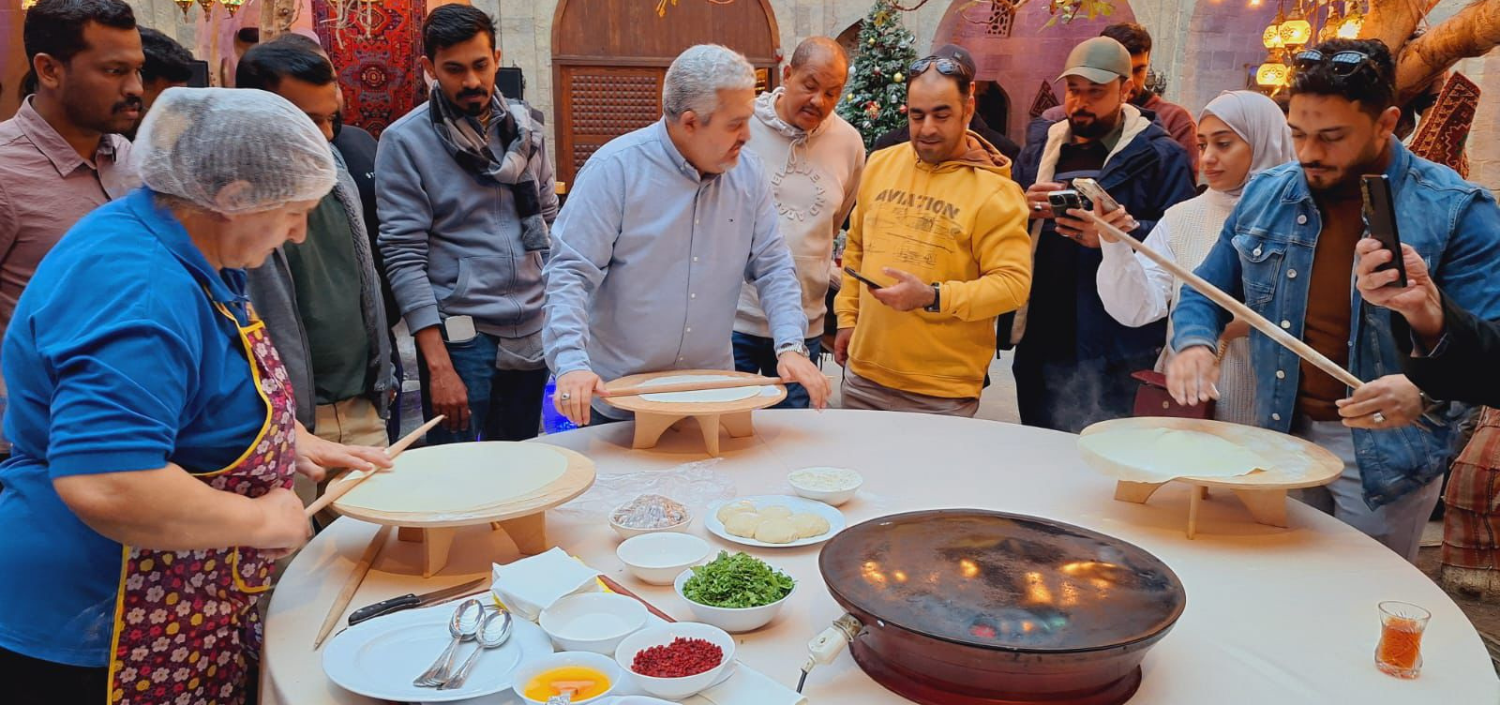
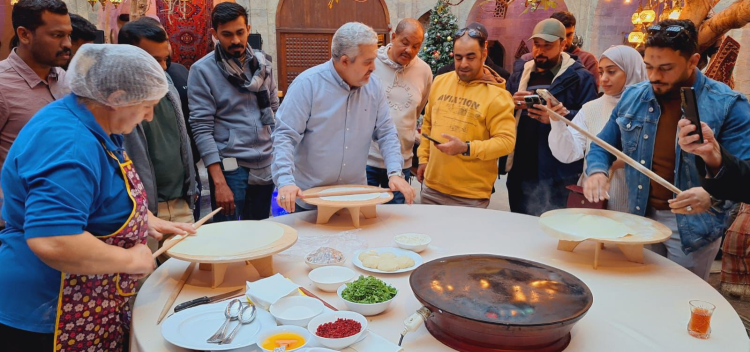
Qutab
Thin flatbread filled with herbs, meat, pumpkin, or cheese. Qutab is one of the most honest introductions to Azerbaijani food — light, adaptable, and often seasonal depending on what’s available. It’s commonly eaten as a quick meal or shared snack. Locals rarely make a spectacle of it; it is practical food with cultural depth of nomadic heritage.
Döner
Originally associated with working-class neighborhoods and fast, affordable meals, döner in Baku has gradually entered the middle-class diet over the past decade. It moved from being “fuel for workers” to a normalized urban staple.
It is fast, inexpensive, eaten on the move and rarely romanticised.
For many locals, street food largely means döner. But reducing Azerbaijani everyday food culture to döner alone would miss its broader bakery and tea traditions.
Döner is not heritage cuisine — it is urban rhythm for students and working class.
Bakery Culture: Döymə, Poğaça, Pirojki and Shor-Goğal
If you want to understand daily life, step into a neighborhood bakery. They are not curated pastry boutiques but practical, warm, and local.
Döymə
Soft baked twisted buns, sometimes plain, sometimes filled with cheese, chicken or meat. Often consumed as a quick breakfast or mid-day snack. Familiar, comforting, and inexpensive.
Pirojki
Dough filled most commonly with potato. Affordable, filling, and deeply embedded in post-Soviet urban food culture. Rarely presented as “traditional,” yet widely eaten.
These baked goods are inexpensive, require no reservation, rarely appear in travel blogs and deeply representative of daily eating.
Eating them warm, standing outside the bakery, is often more authentic than sitting for a long restaurant meal.
Tea (Çay)

Tea is not simply a beverage in Azerbaijan but a social pause. It arrives after food or during conversation or as an excuse to slow down.
Served in traditional armudu glasses (pear-shaped), usually without milk, sometimes accompanied by jam or sugar. There is also a clear social distinction in where tea is consumed.
In local tea houses, tea is extremely affordable, almost symbolic in price. These spaces are modest, functional, and part of neighborhood rhythm.
In restaurants, bars, and curated cafés, the same tea can be many times more expensive. The setting changes; the ritual remains. Understanding this difference reveals something important
Context-Dependent Classics: Dishes That Need the Right Moment
Some of Azerbaijan’s most famous dishes are misunderstood because they are eaten at the wrong time, in the wrong place, or in the wrong way.
Kebab
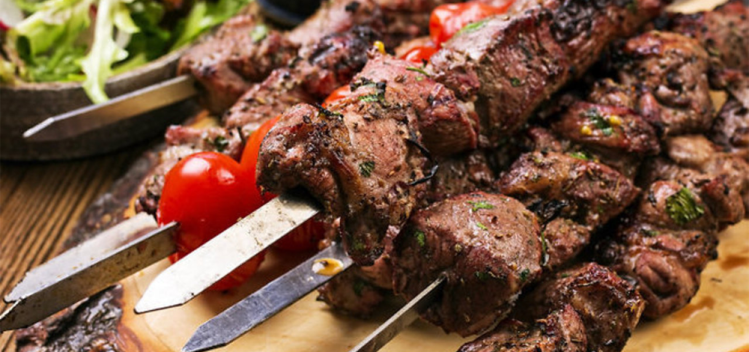
Kebab is grilled meat cooked over charcoal, often outdoors on a mangal (grill). While available in restaurants year-round, its cultural meaning is different.
Traditionally, kebab is associated with: family and friends gatherings, hospitality, away weekends and celebrations.
And very often, it is prepared by men. The act of grilling becomes social performance — not in a theatrical way, but in a quiet, familiar ritual of hosting. Someone stands by the fire. Conversation happens around it. Smoke carries across the courtyard or garden.
Ordering kebab alone in a quiet restaurant does not always capture this context. The flavor may be the same, but the meaning shifts.
Kebab makes the most sense: in groups, outdoors when possible and when there is time for long evenings. It is less about the meat and more about the moment.
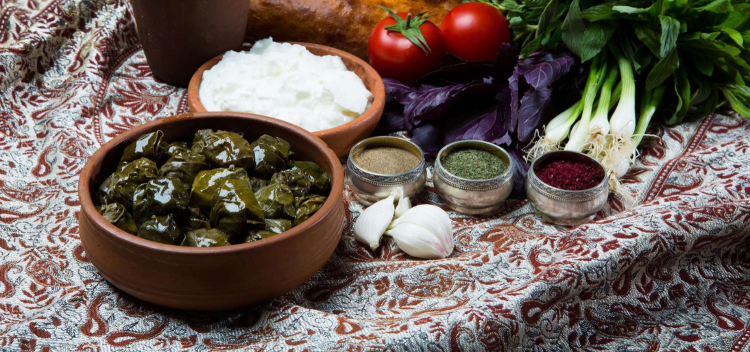
Dolma
Often associated with celebration and family meals. It is rarely an everyday order for locals at restaurants. Best enjoyed when shared and not rushed.
Plov (pilaf)
Symbolic and important — but not a casual lunch. Plov is traditionally connected to gatherings, weekends, and hospitality. Ordering it alone at midday can feel heavy and disconnected from how locals experience it.
Soups and slow-cooked dishes
These are deeply tied to weather. They make sense in colder months, when meals are slower and eaten indoors. In summer, locals naturally move away from them.
Xəngəl (Khinagal) belongs firmly to colder months. It is a hearty dish of dough pieces served with meat, yogurt, or sauce depending on regional variation. It is filling, warming, and rarely eaten in summer.
Locals often associate it with rainy days, colder evenings and slow indoor meals.
But when the weather turns cold — especially when it rains — it feels correct. Comforting. Anchoring.
Like many Azerbaijani dishes, its logic is climatic.
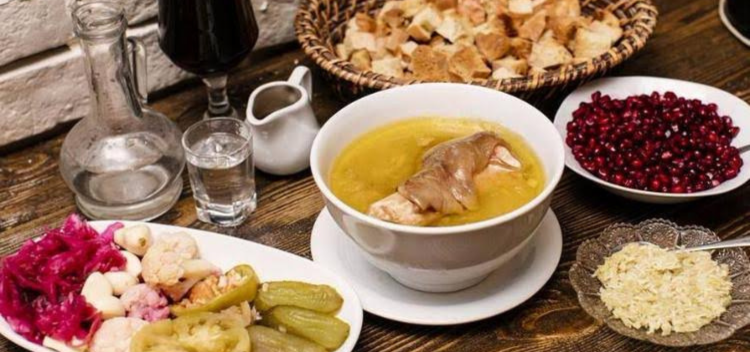
Xaş (Khash) belongs to the deepest layer of cold-weather eating.
It is a slow-cooked soup made primarily from beef trotters, simmered for many hours until rich and gelatinous. It is eaten early in the morning, almost always in winter, and rarely outside of that season.
Xaş is not a casual lunch order. It is ritualistic. Traditionally, it is eaten very early in the day, shared in groups, accompanied by garlic, lavash bread, and sometimes vodka.
The atmosphere is quiet, heavy, and unhurried. It is a meal that demands commitment — in time, appetite, and company, once or twice a year.
Basics of Seasonal Eating: Why Azerbaijani Food Changes Through the Year
All in all Azerbaijani cuisine is not static. It follows climate, harvest, and habit.
Cold Months (Autumn & Winter)
Food becomes:
- warmer
- heavier
- slower
Soups, stews, and baked dishes appear more often. Meals are social, indoor, and unhurried. Portions are larger because walking less and eating more makes sense.
These dishes are explored in depth in our Autumn & Winter food guide.
Warm Months (Spring & Summer)
Food becomes:
- lighter
- greener
- faster
Fresh herbs, dairy, vegetables, and quick meals dominate. Eating is spread across the day, often outdoors, often in smaller portions.
Spring and summer foods deserve their own guide — focused on freshness, markets, and seasonality.
Join us on Baku Street Food Tour – A True Hidden Food Spots
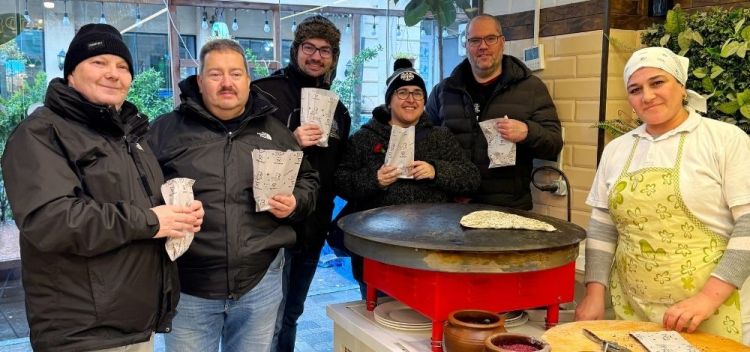
 Baku Food and Wine Tours